Prince of Qin's Triumph
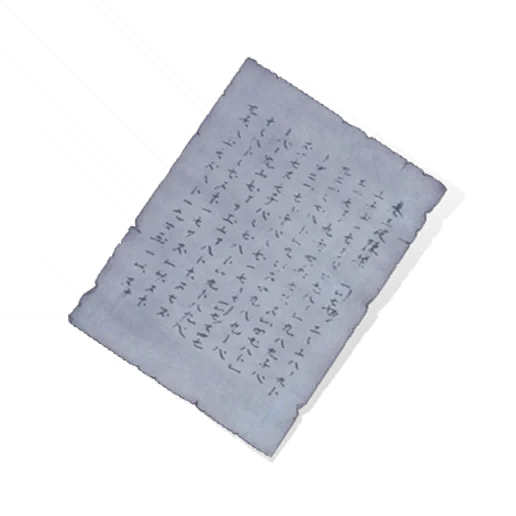

How to Obtain
Located at Palace of Annals, complete the Graceful Melody with Yan Ji and reach the "Melodic Essence" rating

In-Game Description
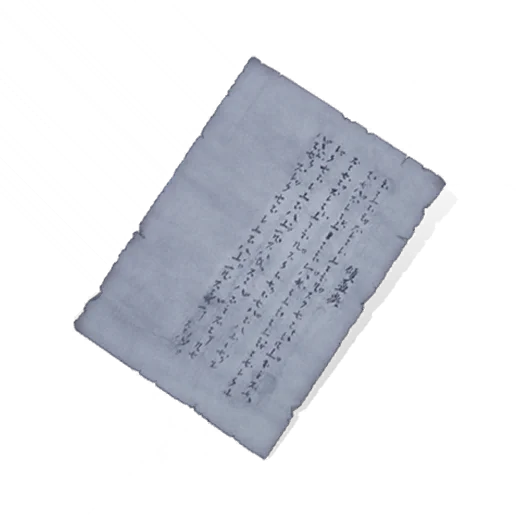
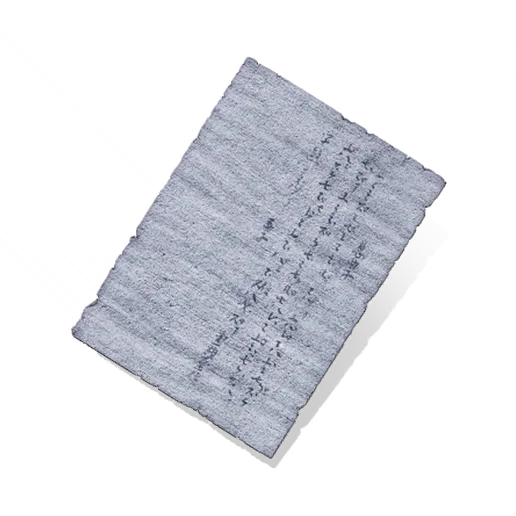
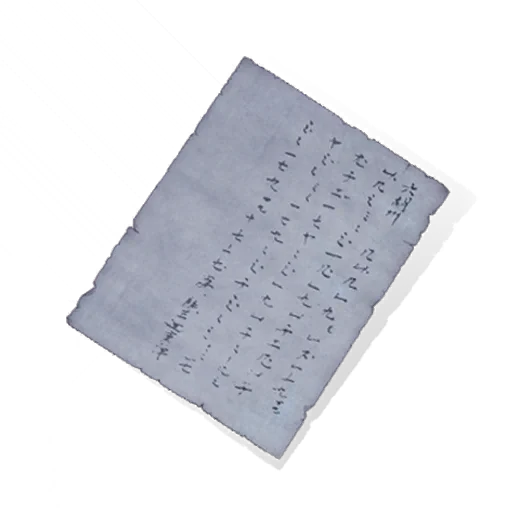
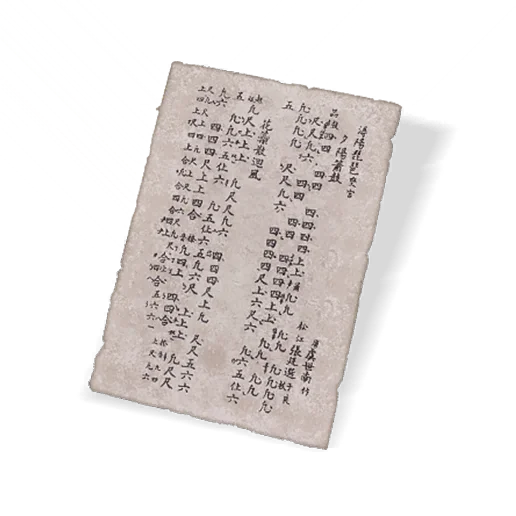
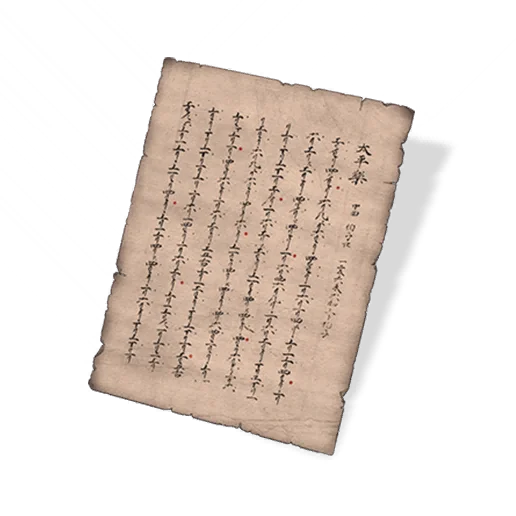
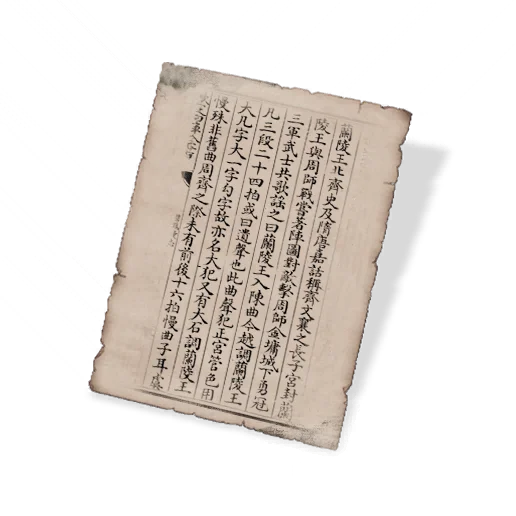
This musical score was lost in China but survives by name and anecdote in ancient texts. According to the Old Book of Tang: Treatise on Music and Extensive Records of the Taiping Era, the piece originated after Emperor Taizong defeated the rebel warlord Liu Wuzhou. The people of Hedong celebrated in the streets with song and dance. Soldiers adapted older military tunes with new lyrics to commemorate the victory, and thus the piece "The King of Qin Crushes the Enemies" was born, later entered the repertoire of the imperial music bureau. In the early Zhenguan era, Emperor Taizong ordered Wei Zheng and others to revise the lyrics, while Lu Cai arranged the melodies and harmonized the composition. The finalized work became known as Prince of Qin's Triumph.
Several variants of the song survive in ancient Japanese Tang-music collections. Among them, the earliest version appears in the Five-String Score, believed to be a Japanese transcription of original Tang court music. This version, regarded as closest to the original, is currently preserved in the Yōmei Bunko in Tokyo.
Attachments