Gongyang Zhuan
How to Obtain
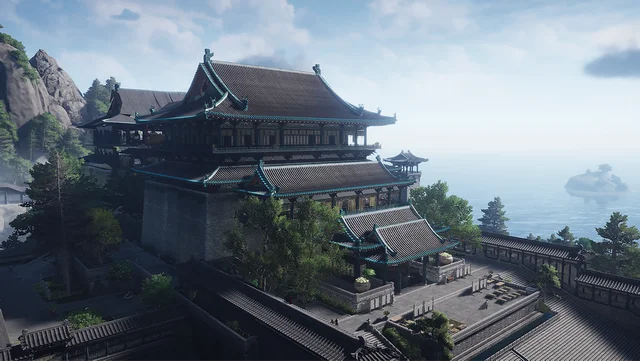
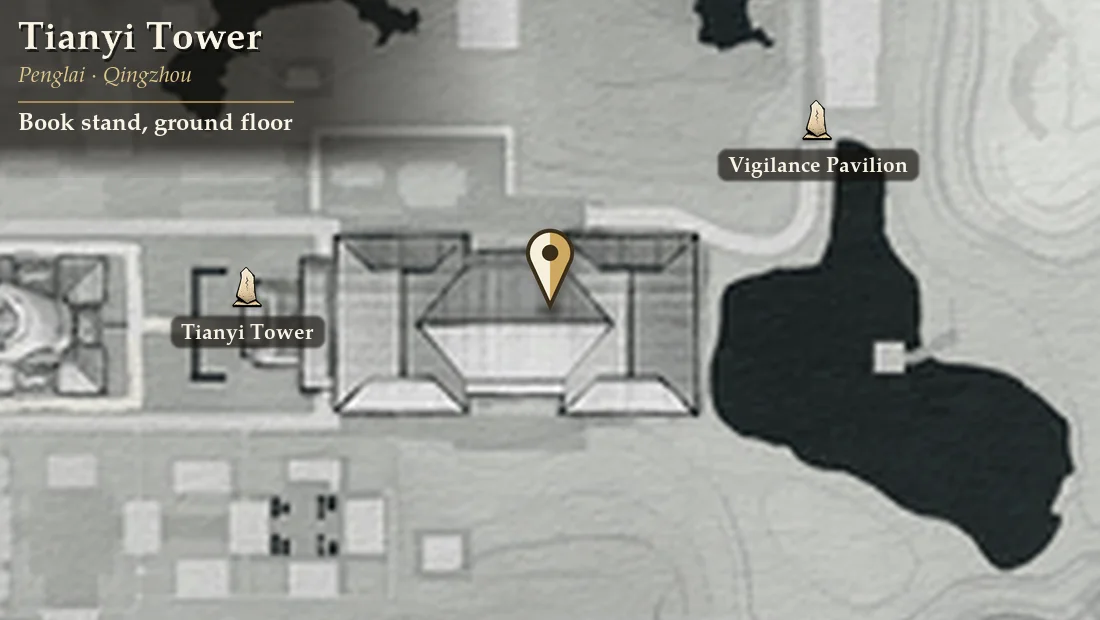
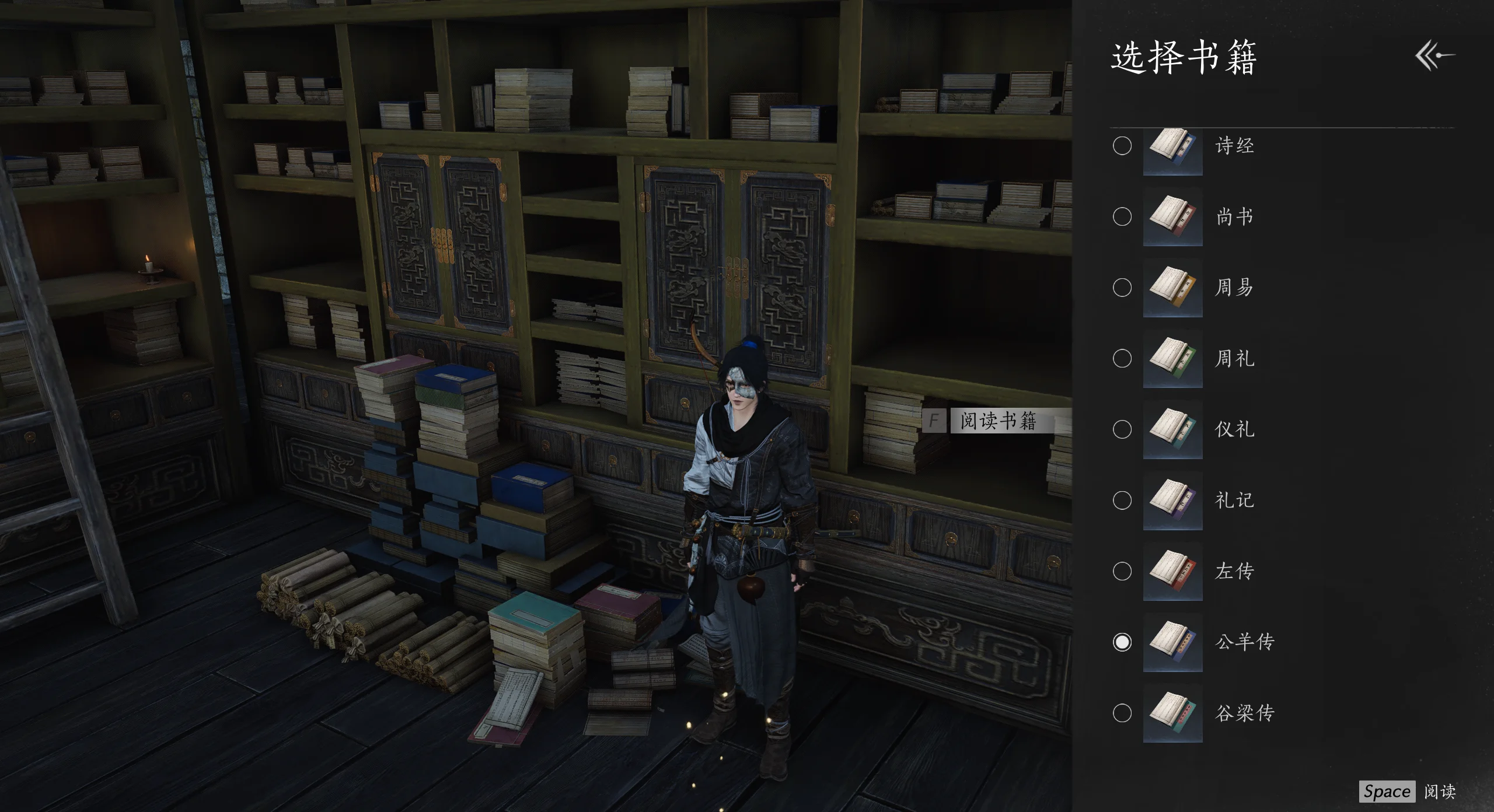
Read it at the bookshelf by the first staircase after entering Tianyi Tower (turn left), selecting "Gongyang Commentary"
In-Game Description
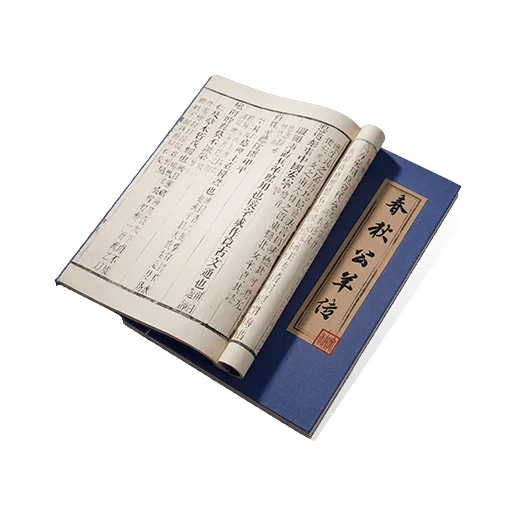
Gongyang Zhuan was completed between the Warring States period and the early Han dynasty. It is one of the Three Commentaries on the Spring and Autumn Annals. The canon and commentary originally circulated separately; later scholars divided the commentary and appended it to the canon, thus producing the text as it stands today. It is said that Gongyang Gao received learning from Zixia, and the teaching was transmitted orally through the generations until, in the reign of Emperor Jing of Han, his great-great-grandson Gongyang Shou, together with his disciple Hu Wusheng, committed it to bamboo and silk, thus establishing the definitive text. The work is devoted chiefly to expounding the subtle words and profound meaning of the Spring and Autumn Annals. Its learning places foremost emphasis on righteousness and principle, and in particular on the precedents of righteousness, drawing from the praise and censure within the canon to seek out the intent of the Sages. In the early Han it was established among the official academies, and a designated Scholar post was created for it. Dong Zhongshu employed Gongyang Zhuan to discourse on portents and calamities and to deliberate on the relations between Heaven and Man, composing the Luxuriant Dew of the Spring and Autumn Annals; Gongsun Hong rose by means of Gongyang Zhuan from a commoner to the office of Chief Minister, and thus its learning spread greatly through the world. In the Eastern Han, He Xiu composed the Interpretation and Explication of Gongyang Zhuan, gathering the full achievement of Gongyang learning across the two Han dynasties; its precedents of righteousness are meticulous, making it the most important annotated edition transmitted to posterity. In the Tang, Xu Yan composed a subcommentary based on He Xiu's annotations, entitled the Annotated Subcommentary on Gongyang Zhuan, and it was incorporated into the official academies.
Attachments