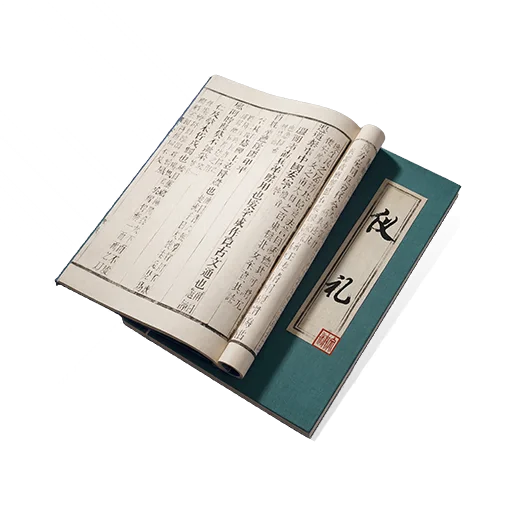
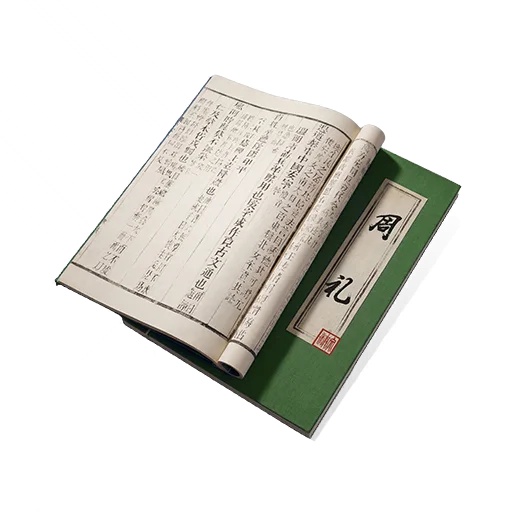
Rites of Zhou
How to Obtain
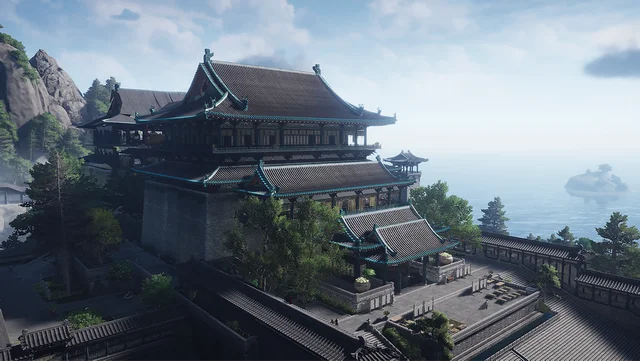
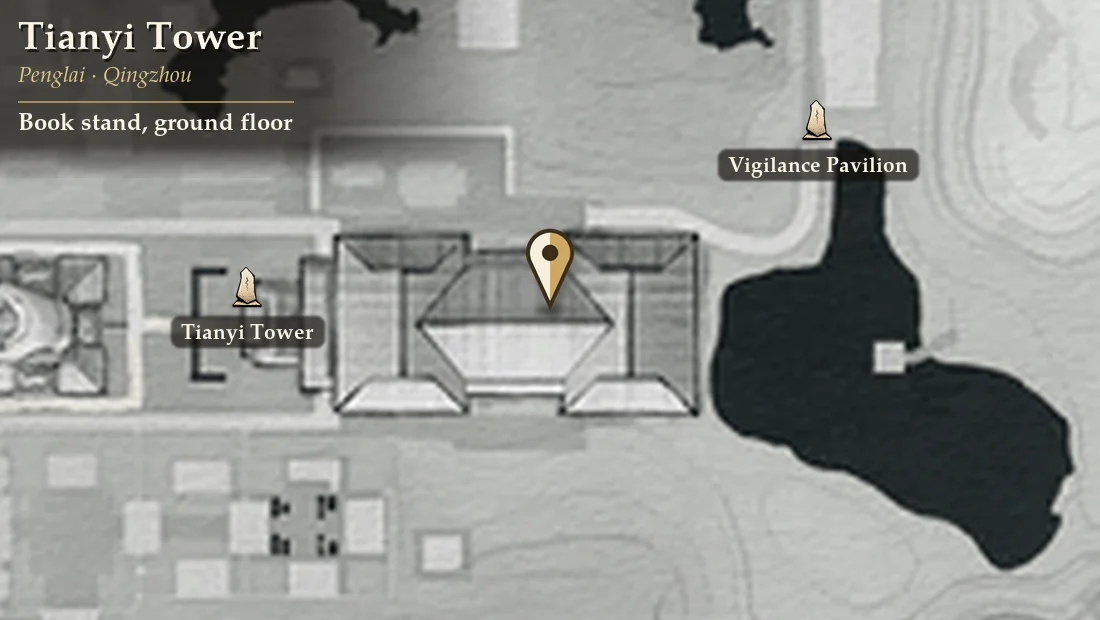
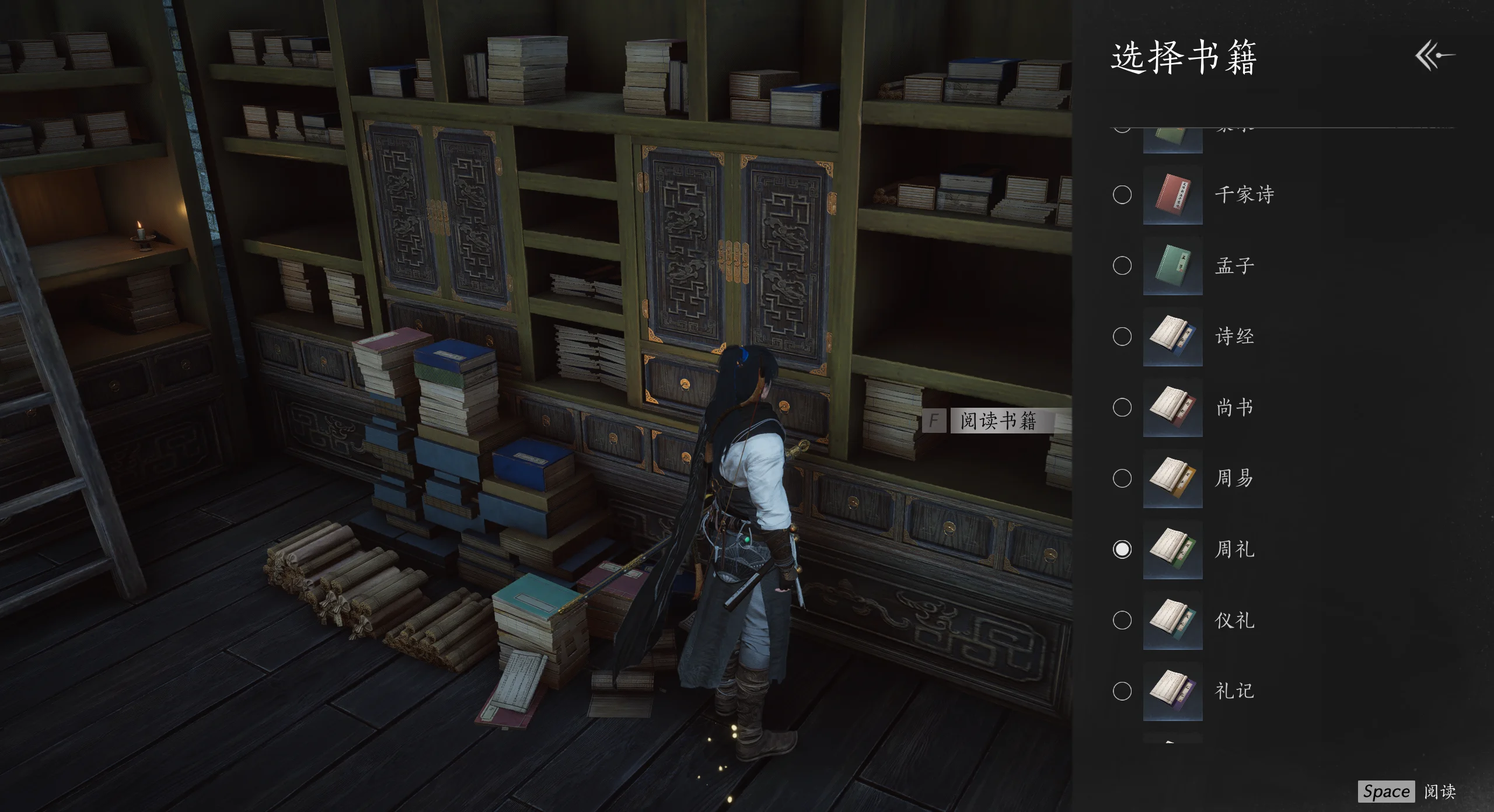
Read it at the bookshelf by the first staircase after entering Tianyi Tower (turn left), selecting "Rites of Zhou"
In-Game Description
Rites of Zhou was compiled between the Warring States period and the early Han dynasty, bringing together the official institutions and ideal political canons of the pre-Qin era. Originally titled the Offices of Zhou, and also known as the Canon of the Offices of Zhou, it was renamed Rites of Zhou by the Han scholar Liu Xin when he catalogued the hidden archives of the imperial library. The full work is divided into six chapters: the Heavenly Office of the Chief Minister, the Earthly Office of the Minister of Multitudes, the Spring Office of the Grand Ritualist, the Summer Office of the Minister of War, the Autumn Office of the Minister of Justice, and the Winter Office of the Minister of Works, each with its subordinate offices, their duties clearly delineated. Vast in size and meticulous in thought, the work encompasses subjects such as civil administration, taxation, ritual and music, military and penal affairs, and construction, extending also into the domains of education and techniques. It is the first work in Chinese antiquity to offer a systematic account of official institutions. During the Western Han, the Winter Office chapter was lost; Han Confucians supplemented it with the Record of Crafts, which records the Techniques of the Artisans. It was enshrined among the official academies in the Han dynasty and listed among the Three Rites. It is said to have been composed by the Duke of Zhou, yet its institutional arrangements depart considerably from the canonical institutions of the Western Zhou. As early as the Eastern Han, He Xiu and others had voiced suspicion that it was "a book of stratagems from the Six States." The Eastern Han scholar Zheng Xuan, who composed commentaries on the full canon of classics, regarded the Rites of Zhou as "the traces of the Duke of Zhou's achievement of great peace" and wrote the Annotations on the Rites of the Offices of Zhou, whereupon the Rites of Zhou rose to stand foremost among the Three Rites. In the Tang, Jia Gongyan composed a subcommentary based on Zheng Xuan's annotations, and Kong Yingda and others revised it by imperial decree, establishing it as the foundation for the official examinations.
Attachments